Describe the window position accurately
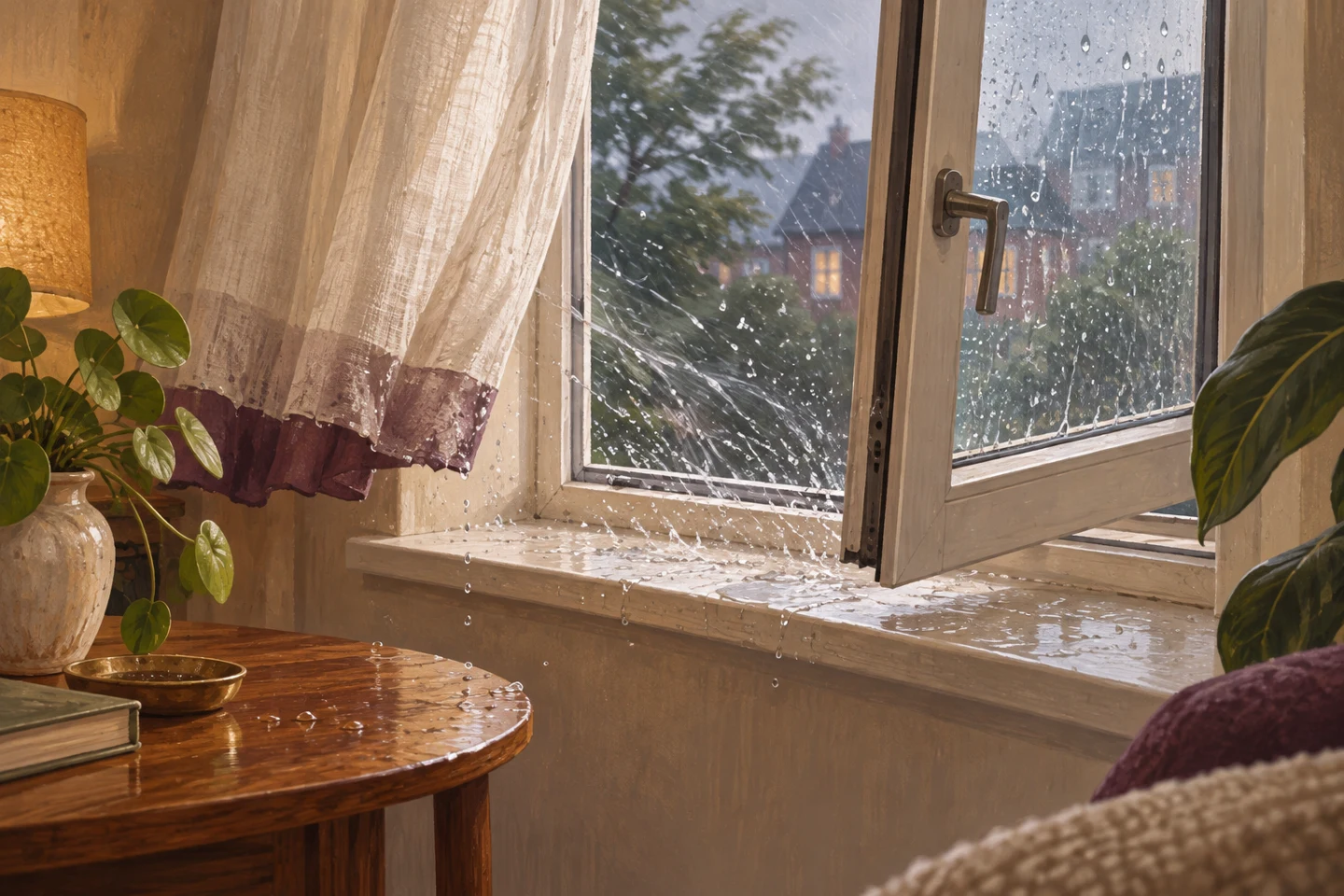
Record which window was open, its position, and when you discovered rain inside. A ventilation setting, fully open window, and damaged latch are different facts. Do not automatically call the event storm damage when all you know is that it rained heavily.
Close it where safe and move accessible belongings away from rain. Then photograph the room and damaged items. Do not adopt an unsafe position to demonstrate the earlier opening. A short chronology and accurate description remain useful when an earlier photograph was impossible.
Interpolis's precipitation explanation lists entry through an open window, door, rooflight, or hatch as an exclusion for its described product. NN's UNWV-03 conditions also distinguish precipitation through open windows and doors. These are specific examples; examine the formulation in your own contract.
Similar wet belongings, different entry route
A wet curtain does not prove the entry route. Was glass broken, a frame defective, or the window deliberately open? State uncertainty and include professional findings where available. Do not turn an unclear situation into retrospective certainty.
Separate possessions from fixed window or building parts. Identify affected objects and available purchase evidence. Ask which repair tasks concern the window and which concern contents. This keeps the event distinct from the amount of loss.
Ask for the precise clause being applied to the entry route. Broader cover does not automatically override a specific exclusion. Equally, rejecting one item does not explain every other item without reasoning. Request an assessment of each relevant part without adjusting the facts to match a desired outcome. Retain the original notification and submit corrections openly if you later discover that your initial description was mistaken.
For example, give the wet books a separate entry from a damaged windowsill. Mark where each stood relative to the opening. If photographs were taken after moving them, explain that movement rather than presenting the later arrangement as the scene on discovery.