Sudden discovery is not necessarily sudden damage
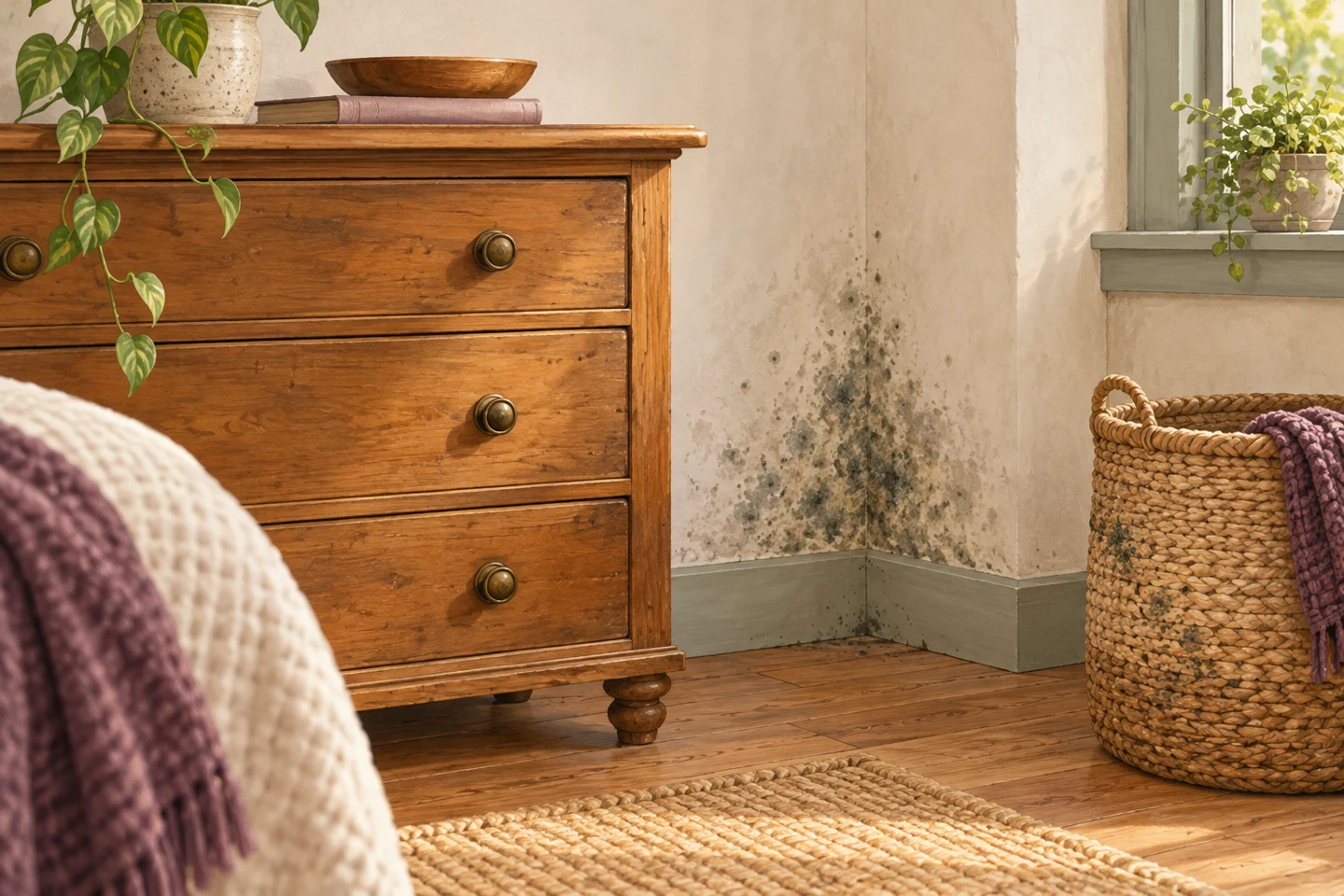
You move a cupboard and find dark patches on its back and on boxes. Discovery occurs on one day, but that does not establish when moisture or deterioration began. Record what you saw, when the area was last checked, and earlier signs. Identify areas that had been hidden behind furniture.
NN's Inboedel Basis PP-2300-10 wording contains a specific mould exclusion. Other products and versions may be structured differently. Read exclusions for mould and gradual causes alongside general water cover. The words water damage on an overview do not answer the whole question.
Investigate the source
Distinguish an active leak, condensation, rising moisture, and an unconfirmed cause. These are not labels a photograph alone allows you to choose confidently. Ask the landlord, manager, or suitable professional to investigate the relevant issue and retain the findings.
A report is clearer when it identifies examination dates, positions, and components. Ask what was not examined too. A moisture reading from one wall does not by itself establish when a stored box became wet. Keep conclusions about the building distinct from the condition of belongings.
Retain earlier notifications to a landlord or repairer. They show when a problem was known and what response was agreed. Do not remove that history because the latest damage is more serious. The chronology should remain visible even when it does not support a hoped-for coverage outcome.
Assess the belongings separately
Where safe, photograph affected objects and identify them in an inventory. Describe visible marks, distortion, and odour as observations. Do not automatically declare every item in a room irreparable. An appropriate restoration business can explain what it can assess for each material.
Do not dry-brush unknown contamination or apply arbitrary chemicals to improve its appearance for a photograph. Seek appropriate instructions concerning safe access, handling, and disposal. This article provides neither a medical assessment nor a cleaning method.
Ask the insurer which cause or exclusion determines its response and which items the conclusion addresses. A dispute about a building wall is different from assessment of clothing or books. Keep necessary work on the source in a separate record: solving the moisture problem and obtaining payment for damaged belongings are distinct questions.
If items must be removed before inspection, explain the urgency and record their identity and condition as safely as possible. Do not keep unsafe materials merely to make a claim look better. Written instructions from the responsible professional or handler help explain why the later room no longer shows the original scene.