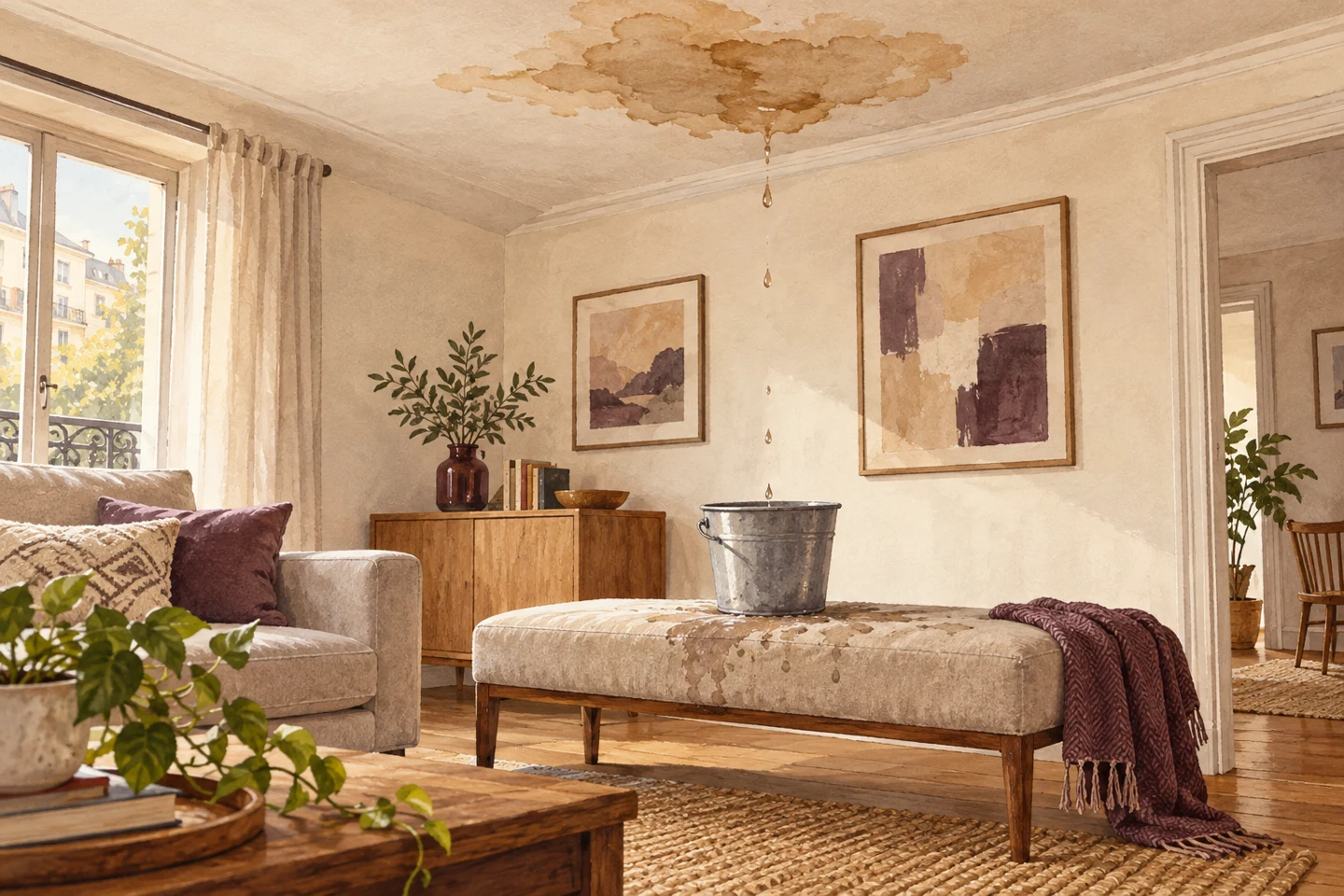
Water from above is an observation
You see water coming through the ceiling and the upstairs neighbours also report a problem. Describe your observation separately from what they told you. A suspected source differs from an established defect. A plumber's or manager's report may later identify the escape point.
Univé's explanation of neighbouring leaks distinguishes belongings, building, and liability questions. Use that division to organise notifications. Water apparently coming from another dwelling does not, without assessment, establish automatic responsibility or one policy for every item.
For an active or unsafe situation, obtain appropriate help and notify the accessible resident or manager. Do not enter another home or work on unfamiliar installations yourself to gather evidence. Record when each notification was made.
Do not wait for every responsibility dispute to end
Ask your own insurer how to notify damaged belongings while the source remains under investigation. Explain the suspected origin and uncertainty. Your notification need not begin only after everybody agrees about responsibility.
Separate furniture, clothing, and other possessions from ceilings, walls, and fixed installations. Tell the landlord or association about fixed damage. For finishes you installed, record who paid and any relevant agreements.
Keep the event account consistent across files. A loose rug does not become a building part because a form seems to offer only that option. Ask for help where the classification does not fit instead of adjusting facts.
Exchange information without inventing an admission
Request relevant information such as examination date, business involved, and an available cause report. Keep personal opinions about maintenance separate from technical findings. A cooperative neighbour need not sign a prewritten admission of fault for you to notify your loss.
Retain messages arranging work and access. Share necessary material appropriately and do not publish photographs from another dwelling without suitable permission. If a report is unavailable, state that it has been requested.
If two professionals give different explanations, keep both and ask what further examination could clarify the difference. Selecting only the report that names another party as responsible does not resolve the technical uncertainty.
Track each part of the response
Ask which insurer or party handles each item and who decides repair arrangements. A business fixing the source does not automatically restore your wet sofa. Obtain distinct arrangements for inspection, drying, or repair of belongings.
Check that a paid item does not remain recorded as entirely outstanding in two files. Disclose advances and direct contractor payments. Keep explanations of deductibles or rejected parts without assuming the neighbour automatically owes the remainder.
If water returns, record the new observation and date. An unresolved source and further resulting damage may raise additional questions. Preserve earlier correspondence so the investigation and agreements after the first incident remain visible.